
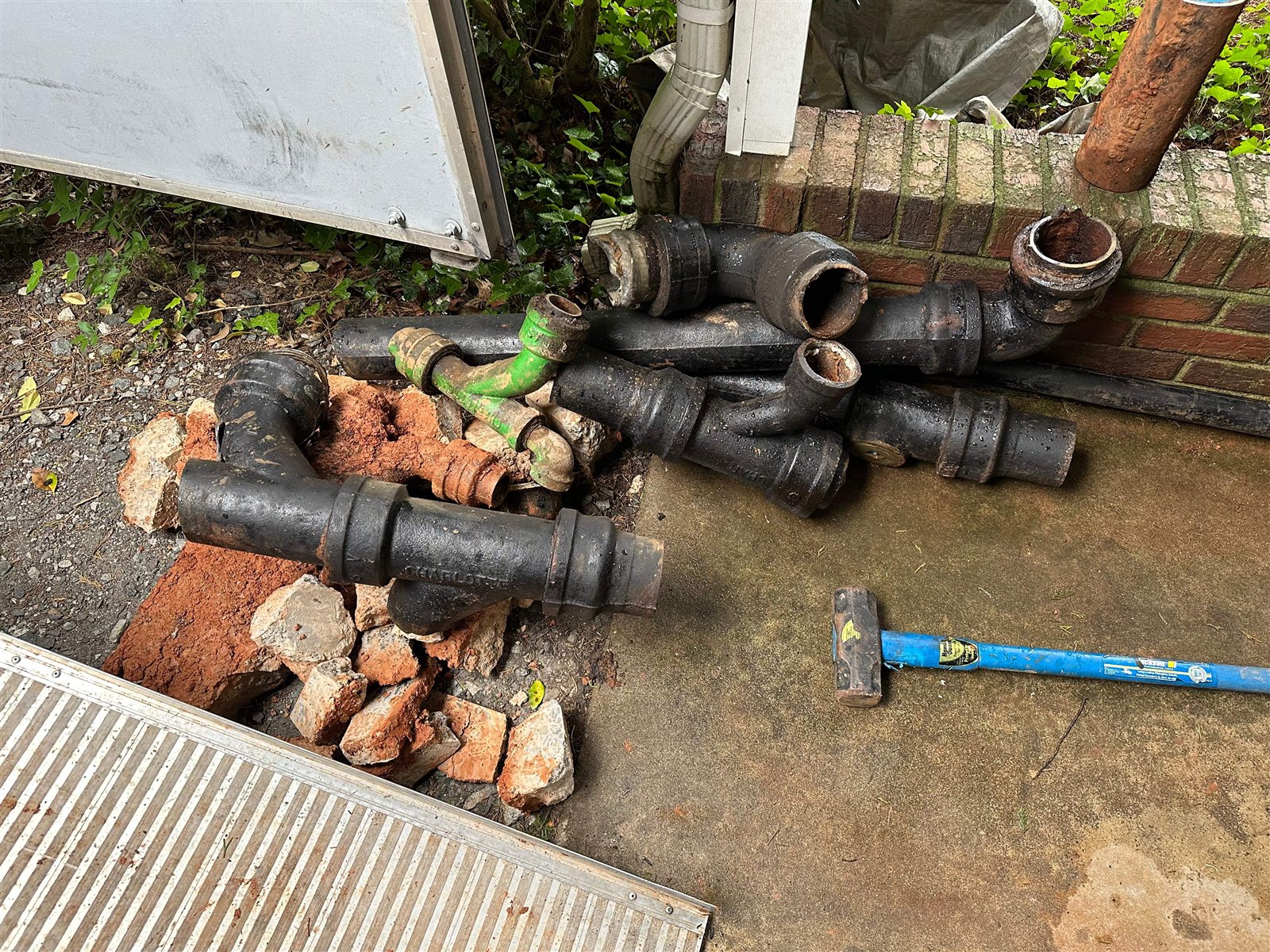
The year your home was built is the first clue to what sewer pipe it has, and a camera inspection is how you confirm it. Homes built before 1965 often have clay tile, homes from about 1955 to 1985 often have cast iron, and homes from about 1945 to 1972 may have Orangeburg. Because those years overlap, a house built around 1960 could have any of the three.
Knowing the material matters because each one tends to fail in its own way, and that points toward the right sewer repair for your line.
What Sewer Pipe Was Used in Homes by Build Year?
Sewer pipe material changed over the decades, so your home's age narrows down the likely options. These are the main materials found in older North Carolina homes:
- Clay tile: common in homes built before 1965. It usually fails at the joints, where tree roots grow in.
- Cast iron: common from about 1955 to 1985. It corrodes on the inside, builds up scale, and the pipe wall can break down over time.
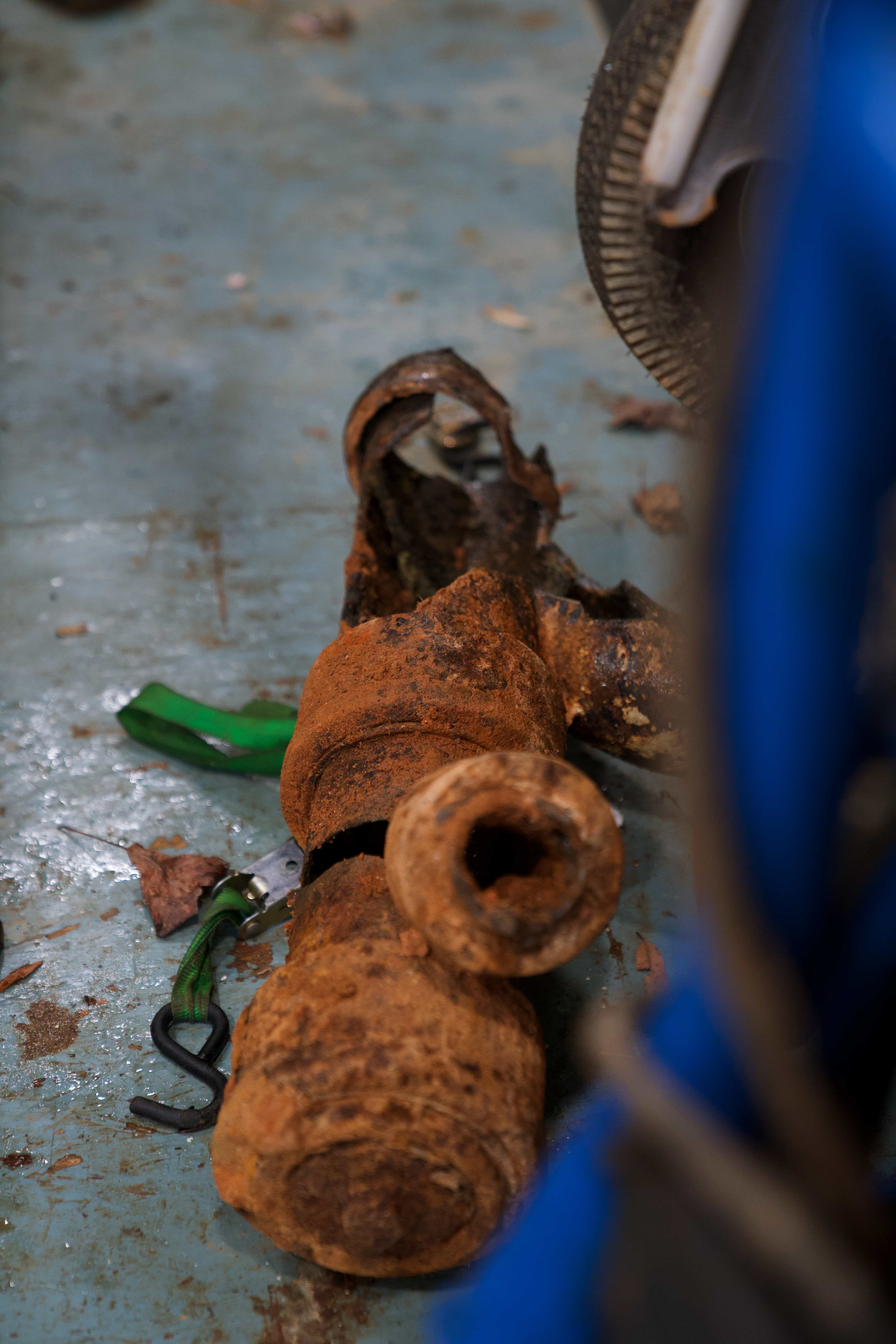
- Orangeburg: used from about 1945 to 1972. It is a fiber pipe made with bitumen, not a metal pipe, and it can deform, sag out of round, or collapse.
- ABS and PVC plastic: found in newer construction. These pipes can settle at the joints or shift out of line when the soil moves.
A home that has been remodeled or partly repaired may have more than one material in the same line.
How Can You Check Your Sewer Pipe Yourself?
You can sometimes see a short piece of the sewer pipe where it leaves the house, near the cleanout, in a basement, or in a crawl space. That piece gives you a clue, but it does not prove what the rest of the buried line is made of.
If you can see the pipe, here is what to look for:
- Clay tile is a hard clay pipe laid in short sections, with a joint every few feet.
- Cast iron is heavy metal pipe that often shows rust on the outside. A magnet will stick to it.
- Orangeburg is a fiber pipe that can look dark, much like cast iron. A magnet will not stick to it, because it is not metal.
- Plastic pipe is usually black (ABS) or white (PVC).
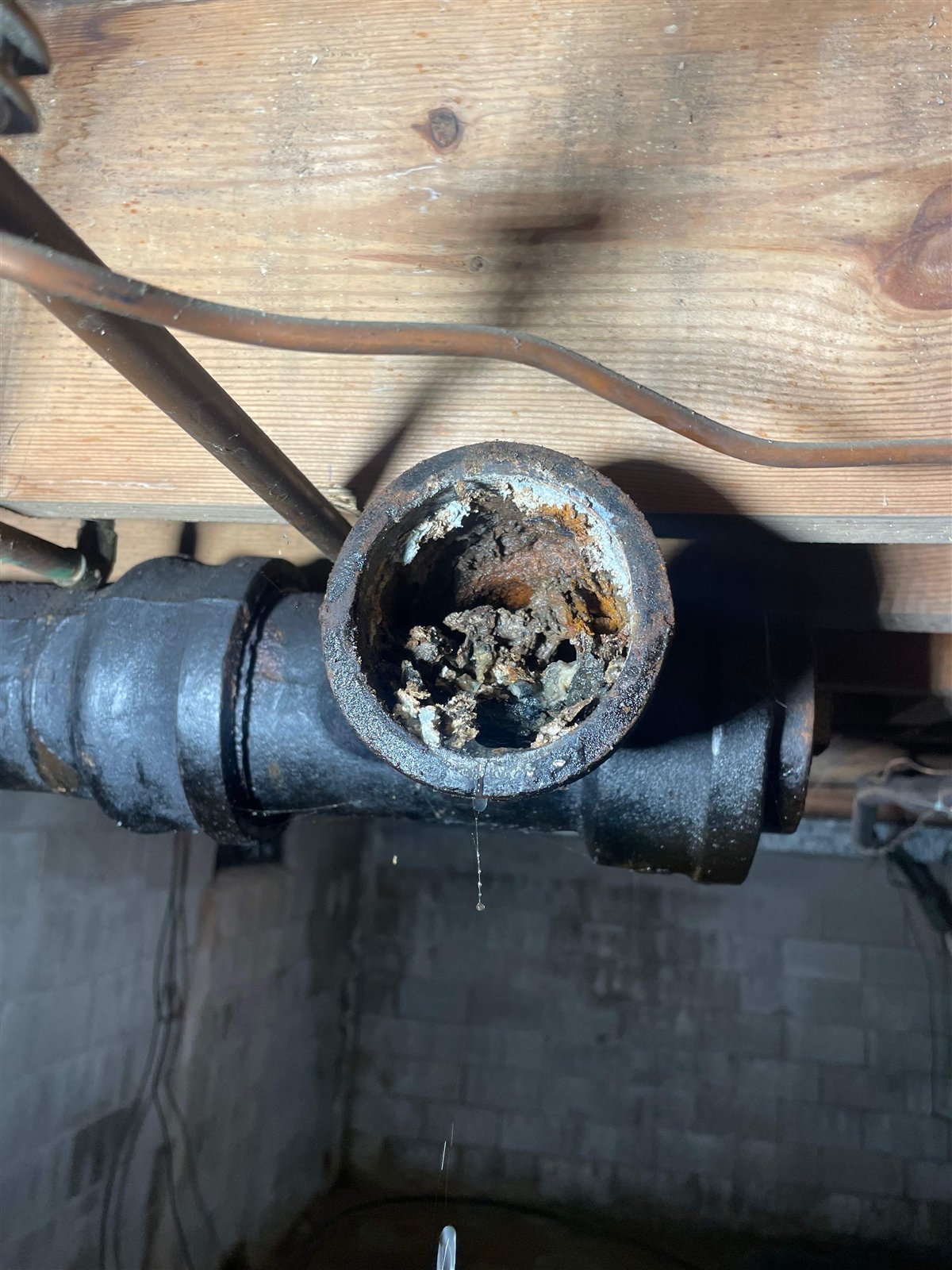
The pipe you see inside the house may not match the pipe under the yard. Sewer lines are sometimes repaired one section at a time over the years, so the only way to know the whole line is to look inside it.
What Does Each Pipe Look Like on a Camera Inspection?
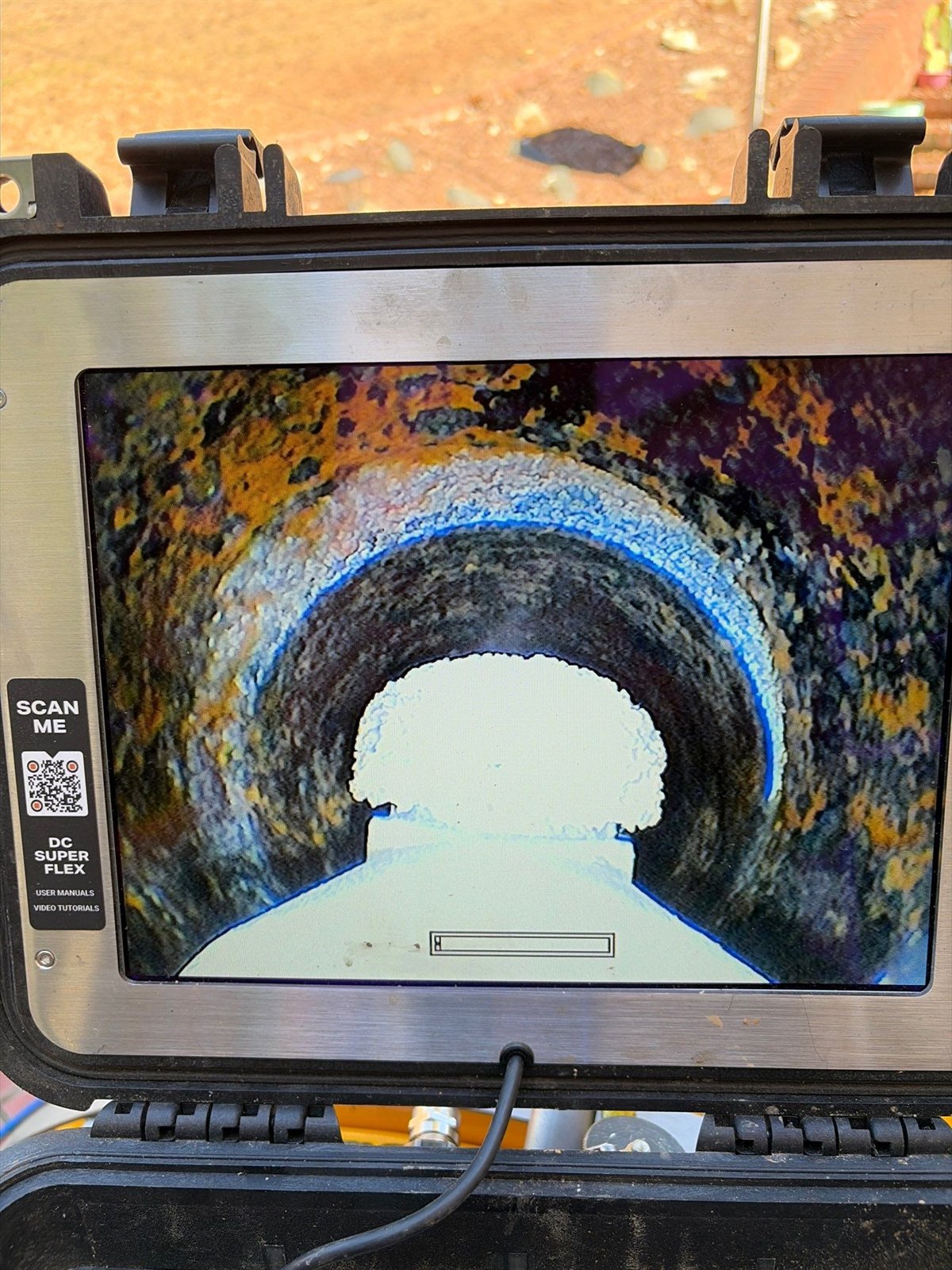
A camera inspection shows the inside of your sewer line from end to end, and each material usually shows its own kind of damage. Here is what our camera often finds in each one:
- Clay tile: roots growing in at the joints, sometimes as a thick mass that slows or blocks the flow.
- Cast iron: rough, lumpy corrosion on the inside wall (called tuberculation), scale buildup, and thin or broken sections of pipe.
- Orangeburg: a pipe that has flattened or bent out of its round shape, and in some lines a section that has collapsed.
- ABS and PVC: joints that have settled or offsets where one section has shifted out of line with the next.
Local conditions add to this. Red clay soil across the Piedmont shrinks and swells with the seasons, which can open offsets at the joints of older lines. Mature oaks, sweetgums, and maples in many established neighborhoods have strong root systems that look for those openings.
When we run a sewer camera inspection, you can watch the footage with us as the camera moves through the line. We explain what we see in plain language, and you keep the video.
Why Does Your Pipe Material Matter for the Repair?
The material and the damage the camera finds together point toward the repair that fits your line. Here is how that usually works:
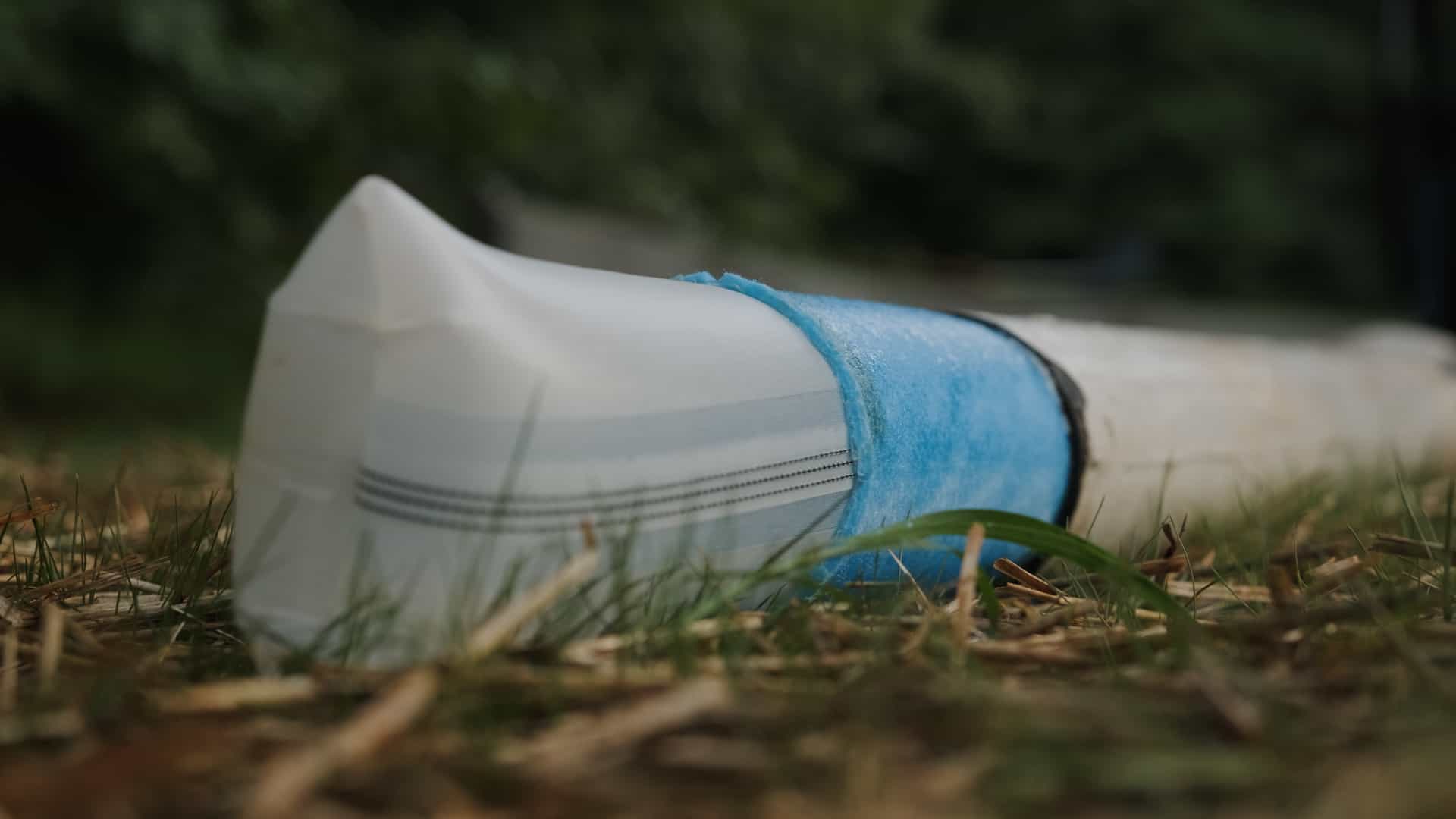
- Clay tile with roots at the joints: cutting the roots back clears the line for a while, but it does not fix the joint the roots came through. If you are seeing tree roots in your sewer line again and again, lining can seal the line. With trenchless CIPP lining, we feed a resin soaked liner into your pipe and cure it in place. CIPP stands for cured in place pipe. Once cured, it forms a continuous new pipe with no joints for roots to enter.
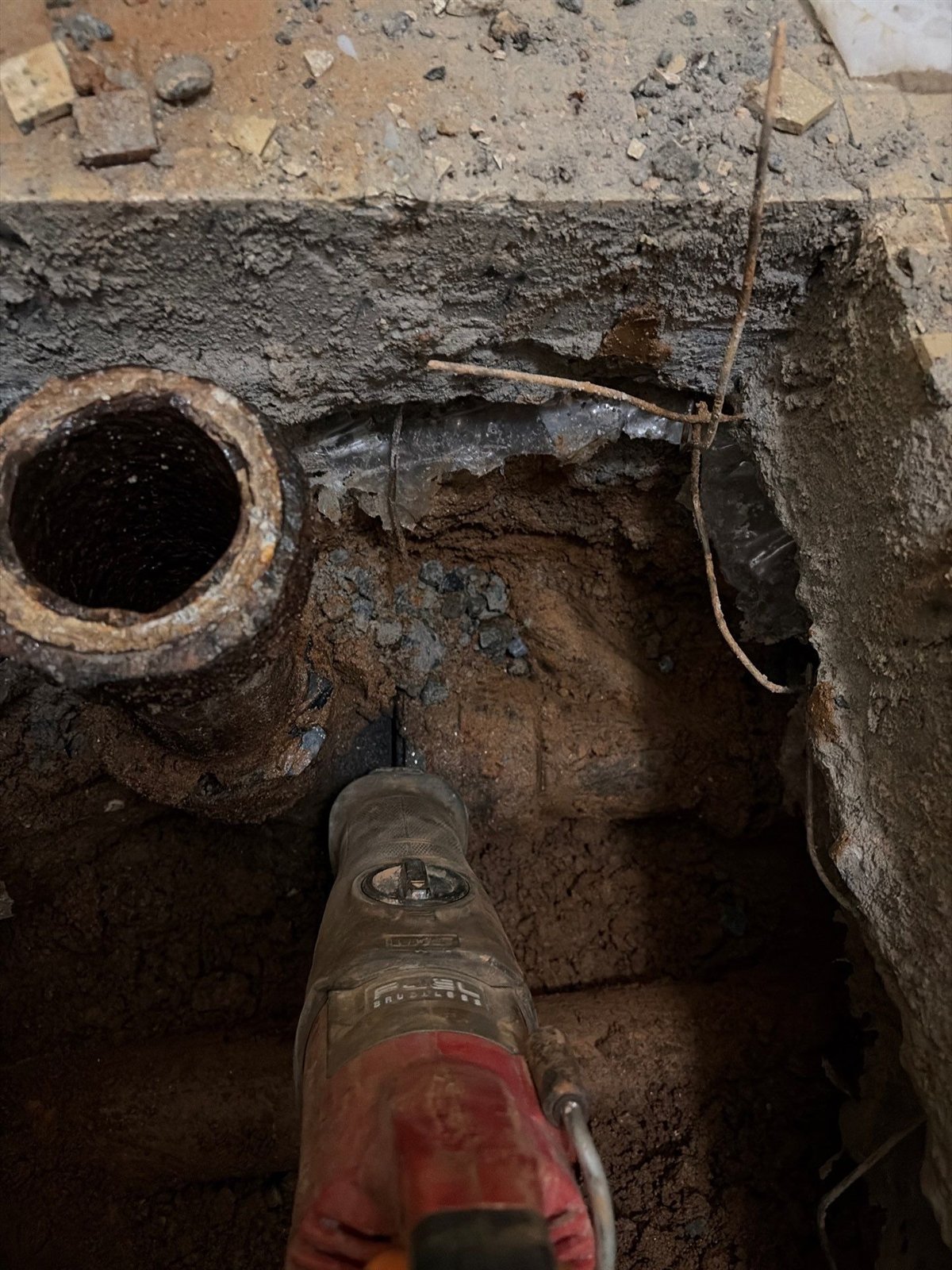
- Cast iron with corrosion and scale: pipe descaling removes scale and corrosion buildup from inside the pipe. Where the wall itself is breaking down, cast iron pipe repair with a liner restores the pipe from the inside.
- Orangeburg that has deformed: lining can often restore Orangeburg pipe that has started to lose its shape. A section that has fully collapsed may need a small access pit, and some lines may need sewer line replacement instead.
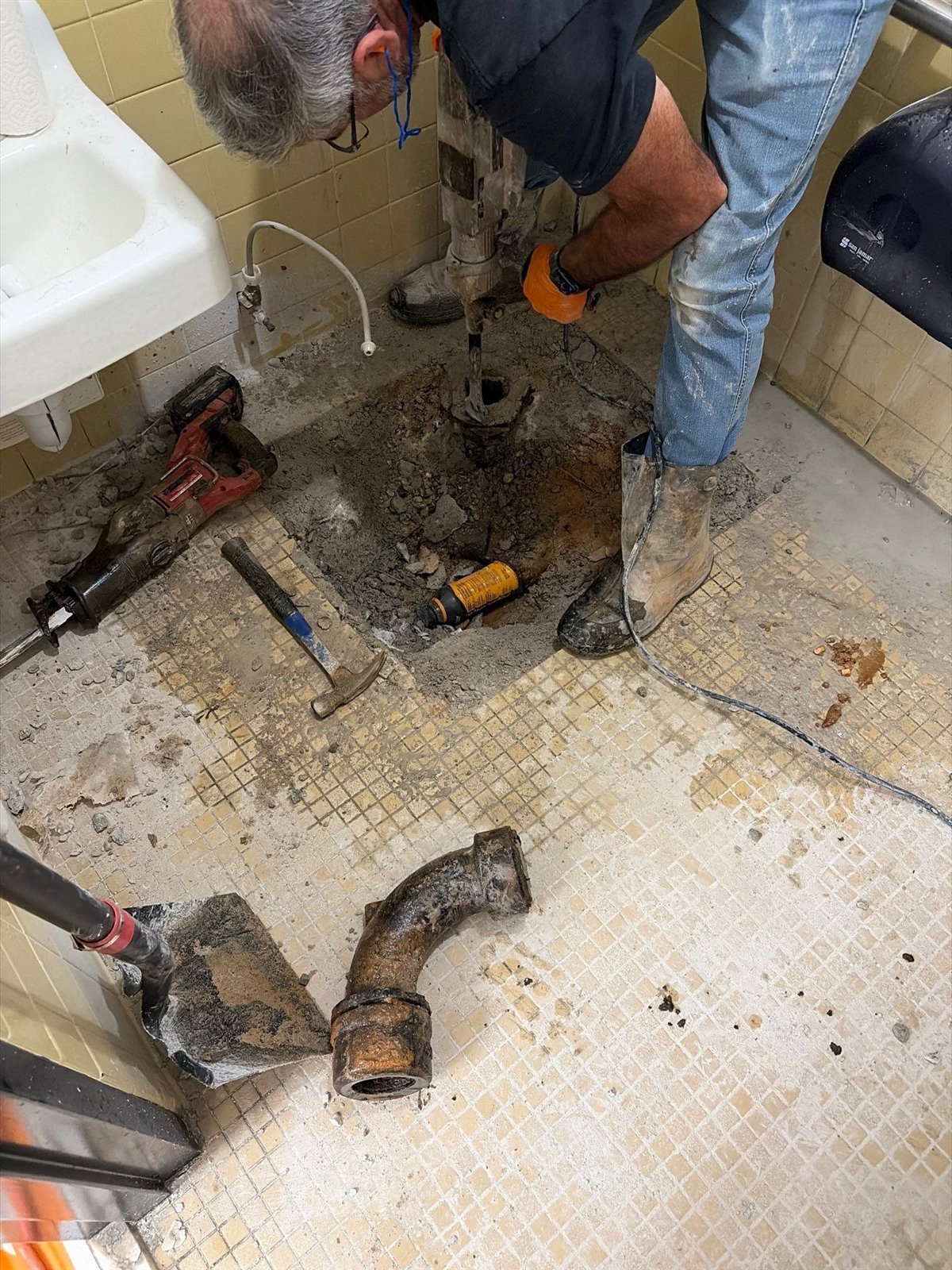
There are limits to what any repair can do. Lining does not fix a belly, which is a low spot in the line that holds standing water. The liner follows the shape of the old pipe, so the low spot stays, and fixing a belly requires digging. In most homes we work from the existing cleanout, but some lines need targeted digging, so we never promise a job with no digging at all.
Do Homes in Winston-Salem, Greensboro and High Point Have Older Sewer Pipe?
Many older neighborhoods in Winston-Salem and Greensboro have clay tile and cast iron sewer lines. Across North Carolina, homes built before 1980 are where we most often find Orangeburg and clay tile.
If your home was built in those years, it is worth knowing what is under your yard before a problem shows up. We serve homeowners in Winston-Salem, Greensboro, and High Point, along with the rest of central North Carolina from our Mocksville base.
What Happens When You Book a Camera Inspection?
A camera inspection is how we find out what is actually going on in your line before anyone talks about a repair. A LiningWorks specialist runs the camera the full length of your sewer line, shows you what is in there, and follows up with a written quote.
You watch the footage with us and keep the video file. There is no pressure to decide anything that day, because understanding your line comes first. When you are ready, Book a Camera Inspection.
Frequently Asked Questions
How do I know if my house has Orangeburg pipe?
Homes from about 1945 to 1972 may have Orangeburg. A magnet will not stick to it, because it is not metal. The pipe you see inside the house may not match the pipe under the yard, so the only way to know the whole line is to look inside it.
Can I tell what sewer pipe I have from my home's age?
The year your home was built is the first clue to what sewer pipe it has, and a camera inspection is how you confirm it. Because those years overlap, a house built around 1960 could have any of the three.
Can pipe lining fix a belly in a sewer line?
Lining does not fix a belly, which is a low spot in the line that holds standing water. The liner follows the shape of the old pipe, so the low spot stays, and fixing a belly requires digging.