
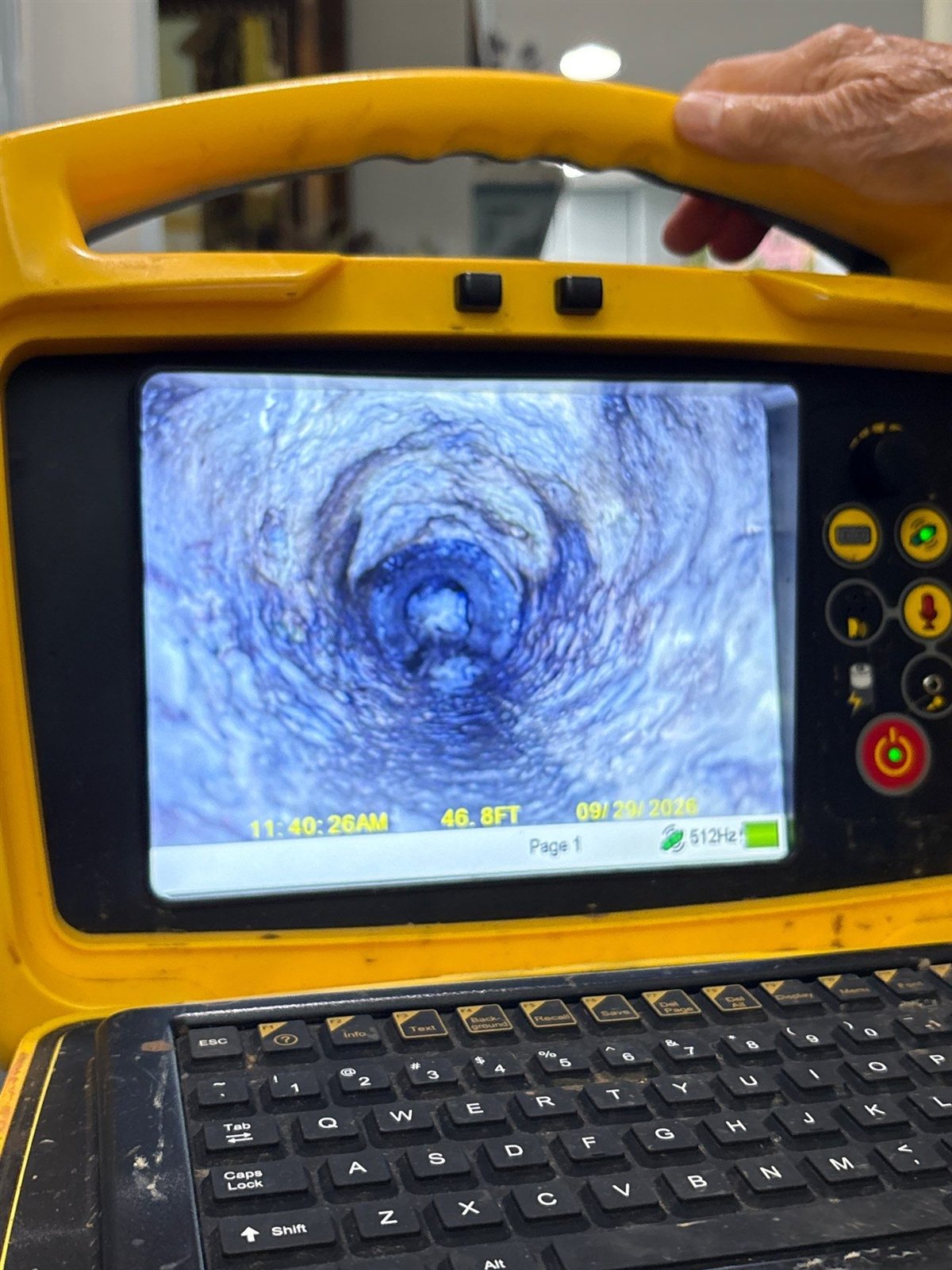
A sewer camera inspection shows the inside of the buried pipe that carries wastewater from a house to the public sewer. It can be a useful step before you buy an older home in Greensboro, Winston-Salem, High Point or a nearby Triad town. The camera can reveal roots, cracks, sags and the type of pipe while there is still time to ask questions.
The sewer line is easy to overlook because nobody sees it. It runs under the yard, and in an older home it may have been in place since the house was built. Repairs to a buried line can be a large expense. Knowing its condition before closing gives you more to go on when you decide.
This guide explains what the camera can find and what the footage cannot tell you. It covers what to ask when the results come back and what your options are if the inspection finds a problem before closing.
Why Might a Standard Home Inspection Miss Sewer Line Problems?
A standard home inspection usually focuses on the parts of the plumbing an inspector can see and reach. The buried sewer line is out of sight, so a general inspection may not show its condition.
A home inspector may run water through the fixtures and watch how the drains empty. That can catch a slow drain or a leak under a sink. It may not reveal a cracked joint or a root mass under the front yard. This is more likely when the house has been empty and the drains have seen little use.
A camera inspection gives you a view inside the pipe itself. If you are unsure what your home inspection covers, ask your inspector before the appointment.
How Does a Sewer Camera Inspection Work?
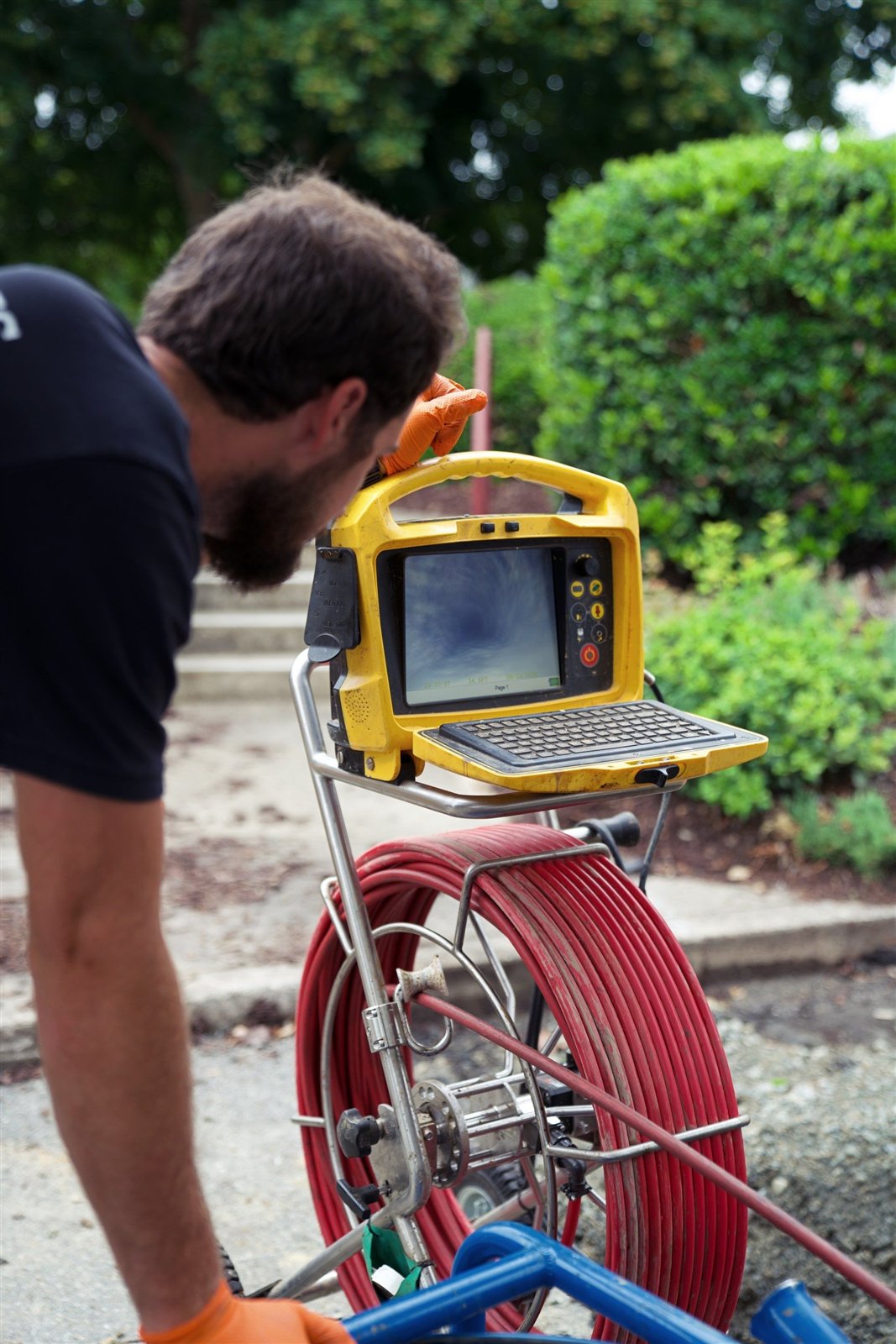
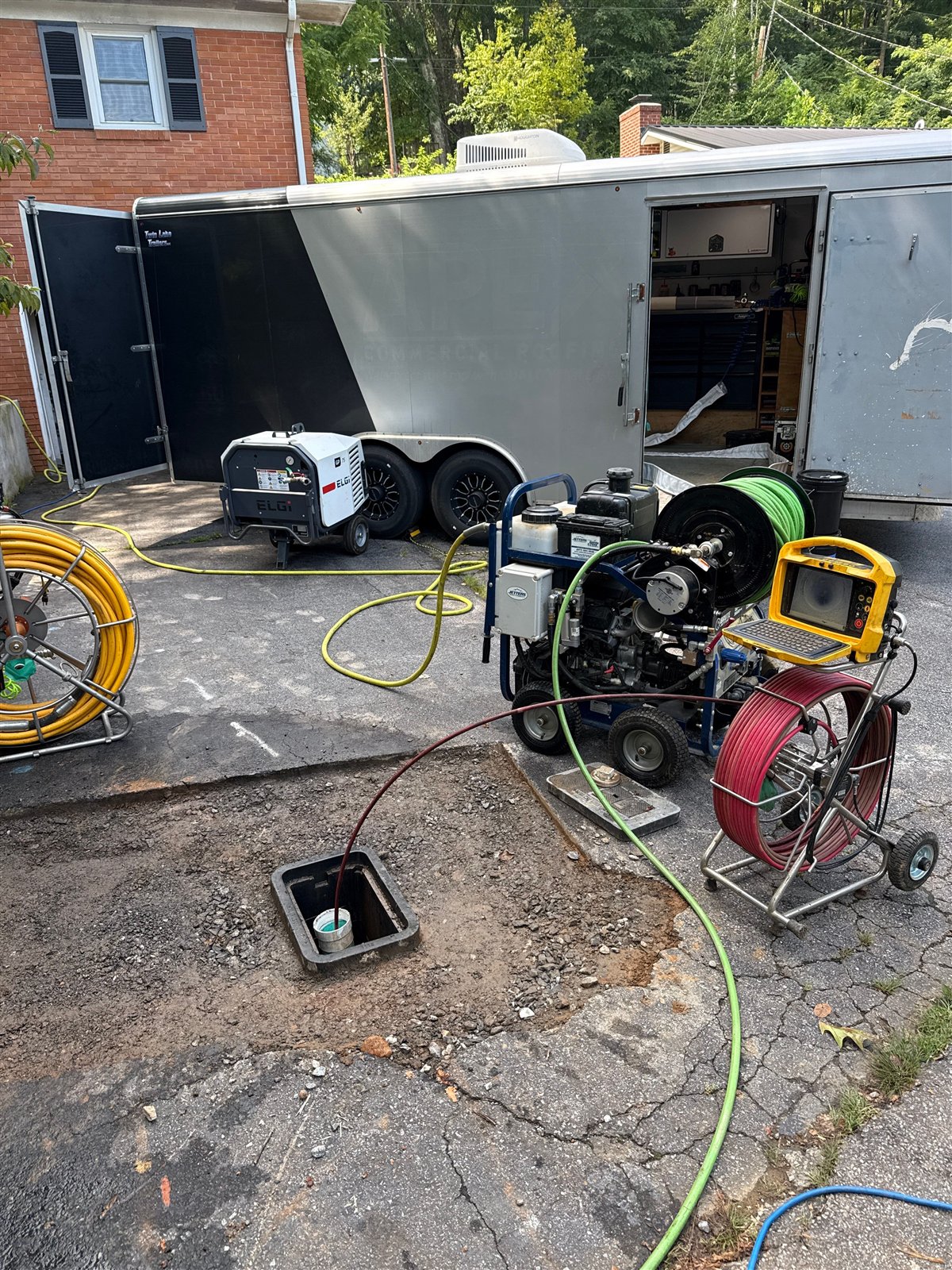
A technician feeds a small waterproof camera on a flexible cable into the sewer line, usually through a cleanout. The technician watches a live picture on a screen while the camera records video on its way toward the street.
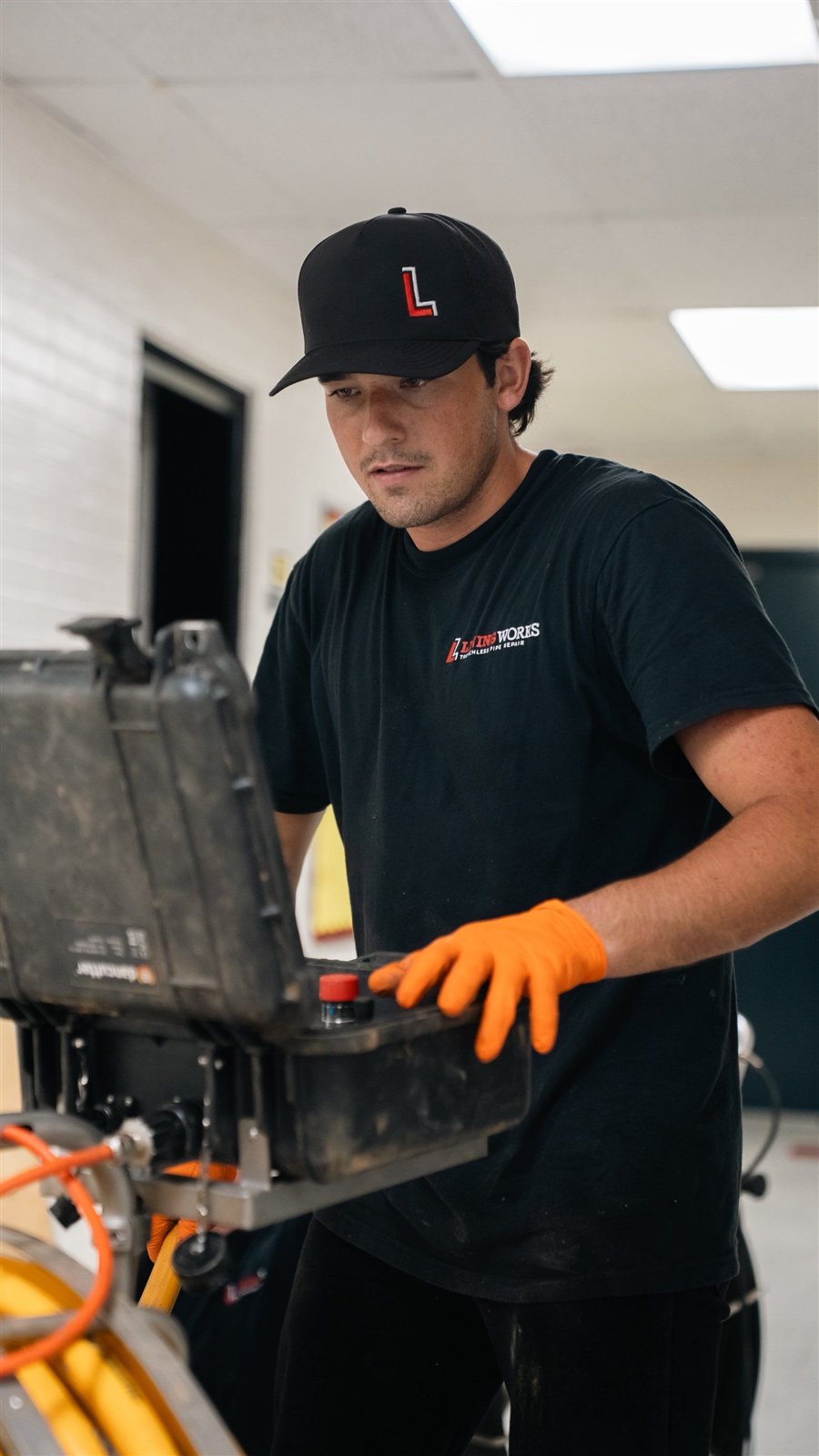
A cleanout is a capped pipe that gives access to the sewer line. It is often outside near the foundation, but it can also be in a basement, a crawl space or a garage. Some older homes have no cleanout, and the technician may need to find another access point.
Many camera systems show a distance reading on the screen, so each problem can be tied to how far it sits from the access point. Some cameras also carry a small transmitter. It lets the technician mark the spot and the depth from the surface. This step is called sewer line locating, and it can help if a repair is needed later.
The inspection itself does not repair anything. It shows what is inside the pipe so you and your advisors can decide what to do next. For more detail on the equipment and each step, see this overview of a sewer camera inspection.
What Can a Sewer Camera Find in an Older Home's Sewer Line?
A camera can show roots, cracks, separated joints, corrosion, buildup, standing water, low spots and collapsed sections. It can also show what the pipe is made of, which helps explain how the line may change over time.
Tree Root Intrusion
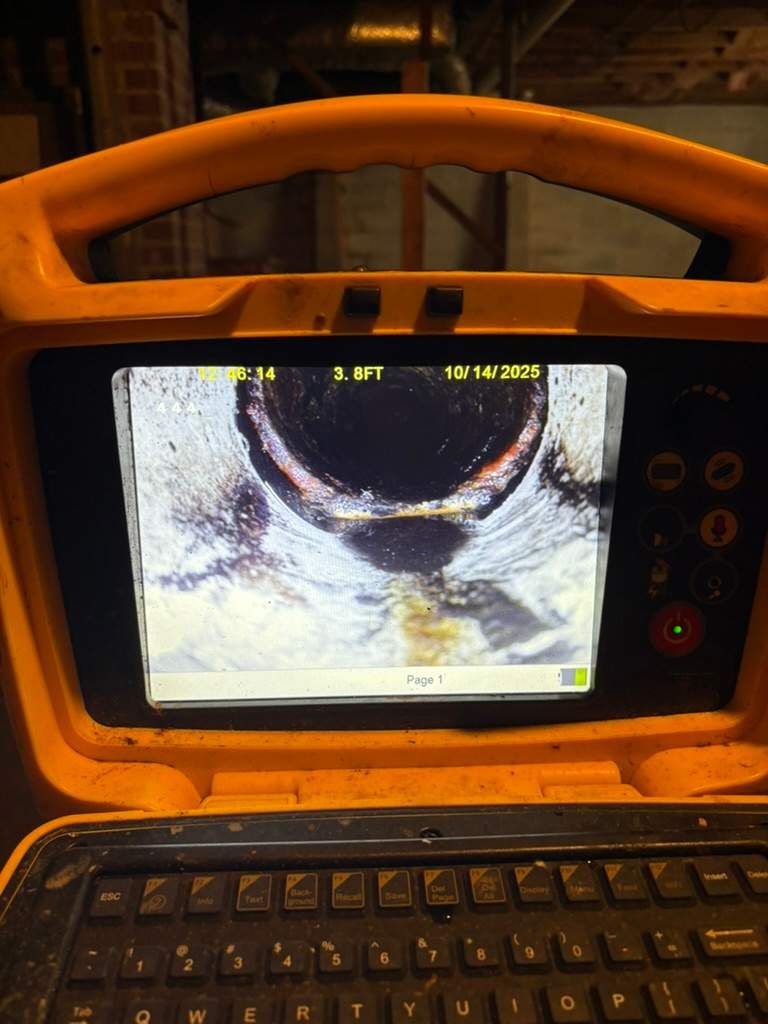
Roots can enter a sewer line through small gaps at joints or cracks. On camera they may look like thin hairs or a thick mass that blocks part of the pipe. Roots growing into the line often come back after they are cut, because cutting them does not close the opening they came through.
Older lines can be more open to roots for several reasons, as this article on why older homes see more root intrusion explains.
Cracks and Separated Joints
Older sewer pipe was often laid in short sections joined end to end. Over time, soil movement can push those sections out of line, which is called an offset or a separated joint. On camera it can look like a ledge or a gap where one section meets the next. Cracks may show up as dark lines along the pipe wall.
Corrosion and Scale in Cast Iron
Cast iron can corrode from the inside. The camera may show rough, lumpy buildup called scale or tuberculation. In later stages it may show thin spots or holes in the pipe wall. Heavy scale can narrow the pipe and catch debris. Repair approaches for this kind of line are covered in this overview of cast iron pipe repair.
Grease and Debris Buildup
Grease, wipes and other debris can coat the pipe or collect in one spot. Buildup on its own is often a cleaning issue. The pipe may still need a second look after cleaning, because buildup can hide cracks or rough spots underneath.
Standing Water and Bellies
A belly is a low spot where a section of pipe has sagged and water collects. On camera it looks like water that stays in the pipe after the drains stop running. Sometimes it is deep enough to cover the lens. Standing water can also mean there is a blockage farther down the line.
Collapsed or Deteriorating Pipe
In some older lines the pipe has lost its shape or fallen in. The camera may show a pipe that looks flattened, oval or broken. It may also stop at a point it cannot pass. That stopping point is a finding too, because it shows where the problem begins.
Why Do Older Triad Homes Often Need a Closer Look at the Sewer Line?
Older homes are more likely to have sewer pipe made from materials that are no longer installed. Those materials tend to fail in known ways. Age alone does not tell you the condition, so the camera is how you find out what is in the ground.
The type of pipe usually depends on when the home was built and whether the line was ever replaced. These are common patterns, though any home can differ:
- Clay tile: common before about 1965. The joints are the usual weak point, and roots often enter there.
- Cast iron: common from about 1955 to 1985. It can corrode from the inside, which builds up scale and thins the pipe wall.
- Orangeburg: a fiber pipe treated with bitumen, a material similar to tar, used from about 1945 to 1972. It can deform, flatten or collapse over time.
- PVC and ABS plastic: found in newer construction and in many replacement lines. The joints can still settle or shift if the soil moves.
A home built in the 1950s might have a clay line, a cast iron line, or a plastic line from an earlier repair. Some lines have more than one material where a section was replaced. The camera footage shows which one you have. It also helps to ask whether the seller has records of earlier sewer work. A newer section may explain a change in material on the video.
How Can Soil, Trees and Past Repairs Affect a Sewer Line?
Much of the Piedmont has red clay soil that swells when it is wet and shrinks when it dries. Over many seasons, that movement can shift older pipe joints. Many established neighborhoods also have mature trees such as oaks, maples and sweetgums. Roots tend to grow toward moisture, which can draw them to a leaking joint.
Past repairs matter too. A line may have a new section in one spot and original pipe everywhere else. The place where two materials meet can be a weak point.
Greensboro has many neighborhoods that were built in the middle of the last century and have mature trees. Homes there may have clay tile or older cast iron lines. This page on Greensboro sewer problems covers the issues that come up in older homes there.
What Can Sewer Camera Footage Not Tell You on Its Own?
Camera footage shows the inside of the pipe on the day it was recorded. It cannot always show what is outside the pipe or predict how long the line will last. It also cannot tell you what a repair will cost.
- Standing water or heavy buildup can hide the pipe wall. Part of the line may stay hidden until it is cleaned and filmed again.
- A camera may not get past a collapse or a blockage, which leaves the rest of the line unseen.
- The footage shows the pipe and not the soil around it, so it may not reveal gaps or erosion outside the pipe.
- A line that looks sound today can still change, since soil movement, roots and age can affect it over time.
- The video does not set a price. Cost depends on the repair method, the length of pipe involved, the access and the site.
That is why the person reviewing the footage matters. Ask for the full video file and a written summary, and ask the reviewer to point out the spots behind each finding.
What Should You Ask After the Sewer Camera Inspection?
Ask questions that tie each finding to a location, a likely cause and a next step. Clear answers make it easier to compare estimates and to talk with the seller.
- What is the pipe made of, and does the material change anywhere along the line?
- Where is each problem, measured from the access point, and how deep is the line there?
- Does this look like buildup that cleaning may clear, or damage to the pipe itself?
- Did the camera reach the public sewer connection? If not, where did it stop and why?
- Was there standing water, and could it be hiding anything?
- Would you suggest cleaning the line and filming it again before anyone decides on a repair?
- Which repair options fit this pipe, and what would each one involve on this property?
- Can I have the full video file and a written summary to share with my agent and the seller?
This article on what happens after a camera inspection explains how professionals usually move from footage to a plan.
How Can You Tell a Maintenance Issue From a Defect That Needs Repair?
Some findings point to buildup that cleaning may clear, while others point to damage in the pipe itself. A qualified professional who reviews the full footage is the way to know which one you are looking at.
Findings that may turn out to be maintenance issues include:
- A light coating of grease or debris on an otherwise smooth pipe wall.
- A small amount of fine root growth at a joint. It may be cleared, though roots often return through the same gap.
- A short stretch of shallow water that drains away.
Findings that often call for a closer look or a repair estimate include:
- Cracks, holes or missing pieces of pipe.
- Joints that have shifted out of line.
- Heavy scale or thinning in a cast iron line.
- A pipe that looks flattened, oval or collapsed.
- A section that stays full of water, which may be a belly.
- Roots that keep returning after cleaning.
Treat these lists as a starting point for your questions. The same finding can mean different things in different pipes, so the footage review is what tells you what your line needs.
What Should You Do if the Sewer Inspection Finds Damage Before Closing?
Get a professional assessment of the footage, collect repair estimates, and talk with your agent about how the findings fit your contract timeline. In North Carolina, those steps usually happen during the due diligence period.
How Does the North Carolina Due Diligence Period Affect Your Timing?
Under the standard North Carolina offer to purchase form, the due diligence period is a set window for the buyer to investigate the property. The buyer and seller agree on its length. During that time the buyer can ask the seller for repairs. The seller may agree or decline, according to the North Carolina Real Estate Commission.
A buyer can generally end the contract during that period for any reason, with written notice. The due diligence fee paid to the seller is generally not refunded unless the parties agreed otherwise, while the earnest money is typically returned. Your agent or a real estate attorney can explain how your contract handles these details.
Scheduling the inspection during the due diligence period can leave time to review the findings and get estimates before that period ends.
What Repair Options Fit Underground Sewer Line Damage?
The right repair depends on the inspection findings, the pipe material, how much of the line is damaged and the conditions on the site. These are the common options a contractor may discuss for underground sewer line damage:
- Cleaning: water jetting at high pressure can remove roots, grease and scale. It can restore flow in a sound pipe, but it does not repair a crack or a separated joint.
- Point repair: a short liner placed inside one damaged spot in an otherwise sound line.
- Full lining: sewer pipe lining builds a new pipe inside the old one. The method is called CIPP, which stands for cured in place pipe. A liner soaked in resin goes into the old pipe and hardens into a continuous new pipe, often from an existing cleanout.
- Replacement: sewer line replacement removes the old pipe, or the damaged part of it, and puts in new pipe. It usually involves more digging.
Lining can restore the structure of a damaged pipe, but it follows the pipe's existing shape, so a belly stays in place. Correcting a belly requires excavating that section.
Methods that avoid a long trench are often grouped under trenchless sewer repair. Trenchless methods can reduce digging in many cases. Some lines still need a small access pit, for example where there is no cleanout or a section has collapsed.
Ask each contractor to explain why a method fits your footage, what it will and will not address, and what the written estimate includes. Estimates are easier to compare when each one refers to the same spots in the video.
How Can You Clarify Responsibility With the Seller?
Talk with your agent about whether to ask the seller for a repair, a credit or a price change. Each choice works differently, and your agent can explain how each one fits your contract.
If the seller agrees to a repair, ask for the agreement in writing, along with the scope of work and any paperwork from the contractor. You may also want the line filmed again after the work is done, so you can see the result before closing.
It also helps to know where the homeowner's part of the sewer line ends. In many places the property owner is responsible for the line from the house to the public sewer connection, but the dividing point varies. The local water and sewer utility can tell you where it sits for that address.
If a repair is needed, a general guide to sewer repair can help you understand the terms in the estimates you receive.
What Belongs on a Sewer Inspection Checklist Before You Buy?
A short checklist keeps the sewer line on your schedule alongside the general home inspection. Use it as a set of reminders, and adjust it to your contract and the home.
- Ask the seller or listing agent for any records of past sewer work, cleanings or backups.
- Find out whether the home has a cleanout the technician can reach.
- Schedule the camera inspection during your due diligence period, with time left to review the results.
- Ask for the full video file and a written summary.
- Confirm whether the camera reached the public sewer connection.
- Note the pipe material and any change in material along the line.
- Record where each finding sits, by distance and, if available, by depth.
- Get a written repair estimate for any defect. More than one estimate makes comparison easier.
- Share the footage and estimates with your agent before you decide on a repair request.
- Ask the local utility where the property owner's responsibility for the line ends.
- If the seller makes repairs, get the details in writing and consider having the line filmed again before closing.
How Can a Sewer Camera Inspection Help You Decide on an Older Home?
A sewer camera inspection gives you a recording of a buried pipe that you can review, share and ask questions about. A finding does not always mean the home is a poor choice.
What matters is understanding the condition of the line and the likely cost of any work before your due diligence period ends. With the footage, a professional review and written estimates, you can ask for a repair, adjust your offer or move ahead knowing what is underground.
Frequently Asked Questions About Sewer Camera Inspections Before Buying
Does a standard home inspection include the sewer line?
A standard home inspection usually focuses on the parts of the plumbing an inspector can see and reach. The buried sewer line is out of sight, so a general inspection may not show its condition.
Can sewer pipe lining fix a belly in the line?
Lining can restore the structure of a damaged pipe, but it follows the pipe's existing shape, so a belly stays in place. Correcting a belly requires excavating that section.
When should a buyer schedule a sewer camera inspection in North Carolina?
Scheduling the inspection during the due diligence period can leave time to review the findings and get estimates before that period ends.
What should a buyer ask for after the inspection?
Ask for the full video file and a written summary, and ask the reviewer to point out the spots behind each finding.